
ESTABLISHING RULES AND LIMITS
When a specific behavior that benefits the perpetrator while hurting others is not reprimanded, we are in fact rewarding it; hence it will be repeated and multiplied. Thus educational punishment is both necessary and unavoidable at home, at school, in all institutions, and in the country.

In this blog we have mentioned countless times that in the home as in any other institution it is absolutely desirable that positive reinforcement as well as an environment where collaboration, mutual acknowledgement and harmony prevail.

However, it is not less true that there have to be rules which, if not followed, will receive a prompt, effective sanction every time a bad behavior occurs (Ulrich, Stachnik and Mabry, 1977).
UNDERSTANDING THE ESTABLISHMENT OF RULES AND LIMITS
Once clear rules are established, the parents must be the first to comply with them, setting a clear example to the children and guiding their behavior. However, complying with rules and guidelines sometimes implies that the children have to forsake a reward, a yearning, and they’re not always willing to do so.
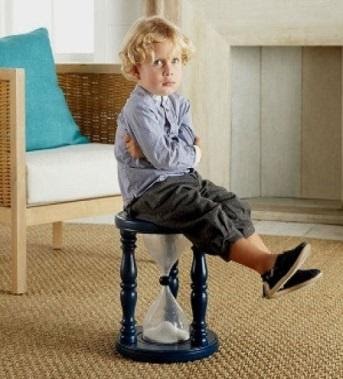
In that case, if they don’t receive an immediate punishment, proportionate to the fault and the child’s age, that inadequate behavior will surely be repeated and multiplied (Sundel and Stone Sundel, 1981).
Once that bad behavior grows and develops, it becomes necessary to increase the intensity and frequency of the punishment, with all the inconveniences that entails: conflictive relations, and a gloomy atmosphere within a home in which it becomes more and more unpleasant to live.
A small child will make small mistakes for which he should receive minor, fitting punishments that point out to him the correct behavior. This should not be considered a harsh treatment, rather it should be seen as a healthy prevention of more grievous behavior, which becomes much harder to handle with time.
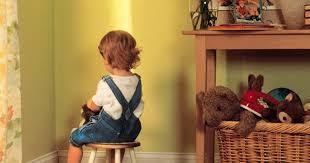
It’s necessary to point out that we are in no way talking about physical punishment, nor about verbal abuse, but about the temporary suspension of a privilege.
HOW TO ESTABLISH RULES
In my book, WHAT DO I DO NOW? NO ONE TAUGHT ME HOW TO BE A MOM, we show several situations in which it was necessary to set limits, first for the babies to make them abandon the pacifier, How do I take away the pacifier?, to make them stop their tantrums, What do I do if my child has temper tantrums?, to make them sleep in their own rooms, What should I do if my daughter doesn’t want to sleep alone. Later on, to stop their bed-wetting, What should I do if my five-year-old son still wets his bed at night?

Later on, for the older ones to make them play ball outside and not in the living room, What should I do if my son doesn’t stop playing ball in the living room when I tell him to?, to make them stop bullying other kids at school, What should I do if I’m told my son is bullying other children at school?, to prevent them form becoming techno- addicts, What should I do if my son is a techno-addict?, to make them obey and help them be happy, What should I do if all I want for my children is for them to be happy?, yes, because abiding by rules is necessary even to be truly happy.
Besides, checking the book and the abovementioned chapters, you can also look up in this same Blog, To punish children, My son has temper tantrums, My child still wets his bed , My child does not obey me, I want my children to be happy.
Likewise, you can visit Facebook Urquia Larralde (psykia), Twitter @psykia20 and Instagram @psykia20. I welcome any comments, questions, critiques that you want to make through psykia20@gmail.com. They are welcome and I will gladly answer them.
BIBLIOGRAPHIC REFERENCE:
Sundel, M. y Stone Sundel, S. (1981): Modificación de Conducta Humana, Publisher Limusa, México.
Ulrich, Stachnik y Mabry (1977): Control de la Conducta Humana, Trillas, México.
