
I WANT MY CHILDREN TO BE HAPPY III
In another chapter (I WANT MY CHILDREN TO BE HAPPY II) I talked about the principles of the practice of parenthood, based on Positive Psychology, and three techniques to increase positive emotions. In this chapter I propose to mention three other procedures that have the same purpose.

HOW TO INCREASE POSITIVE EMOTIONS
The three techniques to increase positivity in children, which we will talk about here, are: the management of praise and punishment, the avoidance of sibling rivalry and the games proposed by Seligman (2011) that parents can play together with their children, before going to bed.
- Praise and punishment. Although love, affection and enthusiasm generate very positive environments, praise should not be given unless the child has a deserving achievement. The sense of helplessness or hopelessness not only develops when one is a victim of adverse events, but also when one obtains favorable effects that do not depend on one’s own actions.
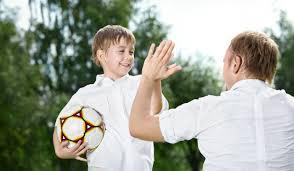
In other words, what is essential for hope, optimism, personal dignity, and happiness is a sense of personal control over facts. For this reason, it is necessary that children learn to develop that sense through consistent effort, which will be sustained with praise based on their real achievements.
Although punishment, on the other hand, is a temporary obstacle to the development of positive emotions, when administered in a manner that is timely and proportionate to a fault, it contributes substantially to the increase of the perception of control. Of course, this punishment must have an educational function (it is not abuse or disqualification), and the child must know the reason for it, as well as the rules he must comply with.
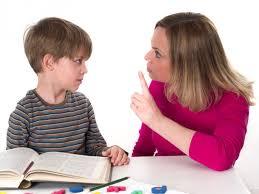
- Sibling rivalry. Positive Psychology raises the idea that sibling rivalry can be the result of a win-loss struggle that competes for little affection and attention. If these goods were offered much more generously, sibling rivalry would not develop.
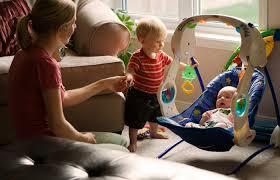
Children want to feel important, reliable, special and irreplaceable. When a new member enters the family, the older children may fear losing importance for their parents. For this reason, we must be especially careful with the advent of a baby and involve the older children, without forcing them, in the upbringing of the baby.
- Before bed. In order to increase the sense of positivity in children, Seligman (2011) proposes two games before bed:
- The best moments. This consists of getting into bed with the children, turning off the lights, hugging them and asking them about the best moments of their day. If the children talk about an event that was not to their liking, the mother or father is responsible for proposing a solution. Finally, an overall estimate of the positive aspects of the day is made, and the next day is planned.

- The land of dreams. Based on the idea that “a child’s last thoughts before falling asleep are charged with emotions and visual images that become strands with which dreams are woven” (p. 332), they are asked to imagine something that makes them truly happy. This is usually easy for them, especially after the previous game. Once the image is described, they are asked to concentrate and verbally designate it.
In my book WHAT DO I DO NOW? NO ONE TAUGHT ME HOW TO BE A MOM! You’ll find this and 26 other common problems in children from birth to age 12. In relation to this specific topic you can check out What should I do if all I want for my children is for them to be happy? And Inducing emotions.
You can also check in this same Blog: I want my children to be happy I and I want my children to be happy II. More information can be found, as well, by visiting Facebook and Twitter. I appreciate any observations, questions, suggestions or criticisms you want to make. Your comments will be welcome and I will gladly reply.
BIBLIOGRAPHIC REFERENCE:
Martin Seligman (2011): La auténtica felicidad, Zeta, Barcelona, España.
