
THE SMALL HAPPY FACES AND THE INFANT HABITS
Who’s not familiar with the smiley faces teachers use frequently to reward children for their good behavior? They love a happy face and it can be a prize in itself; however, the original idea was quite different.

On a previous section (To reinforce children) we said that it was necessary to reinforce desirable behavior immediately after the event, as only the proximate rewards, not the distant ones, can have a real influence on behavior.
But it can happen that what the child eagerly wants is a costly prize, such as a bicycle. In that case, it’s clear that is not feasible.
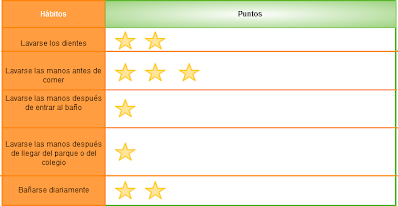
When the hope is to obtain a large reward, for example, for the end of the year, the idea is to use “Tokens Economy”, granting tokens, points, stars or smiley faces every time the child complies with what he is told to do. In this manner the actual behavior is linked with that distant- in- time reward.
WHAT TO KNOW ABOUT TOKENS ECONOMY
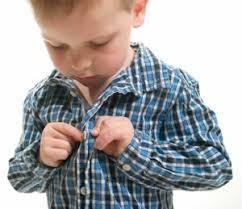
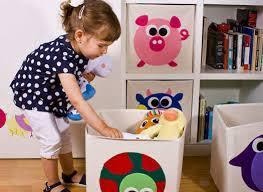
Tokens Economy may be used to reinforce any amount of behaviors. In my book: WHAT DO I DO NOW? NO ONE TAUGHT ME HOW TO BE A MOM, we describe how to use them to teach a a 4-year-old child to get dressed by him, or herself, and to be on time for school; likewise, it can be used to teach a three-year old to put her toys away, and a child of seven to improve her study habits.
Once you become familiar with how to apply this technique, you can use it in any instance where it’s necessary to reinforce a specific behavior, and when the child awaits an important prize.
HOW TO MANAGE TOKENS ECONOMY
In order for the Tokens Economy to work, it’s necessary to:
- Specify the behavior to be improved or reinforced.
- Agree on the prize or reinforcement the child will receive.
- Specify the number of tokens, points of smiley faces required to obtain the prize.
- Stablish precisely how each token may be obtained, if it refers to several conducts, the more complex ones will win more tokens.
- Offer the token(s) or star(s) immediately after the behavior we want to reinforce, has occurred.
- Visibly record those won.
- Define the moment in which the cards will be exchanged for said prize.
- Strictly respect what was agreed, otherwise, it will not work.

It’s useful to point out that in the Tokens Economy there may be several phases, beginning with small demands at the start, so that it becomes fairly probable that the child will be able to comply with them, and continue gradually, without stops and starts, with what is asked of him/her, with arguments such as: You’ve become so big! (Ulrich, Stachnick and Mabry, 197define de mome7)
For details regarding how this method was used in the abovementioned cases, please see WHAT DO I DO NOW? NO ONE TAUGHT ME HOW TO BE A MOM!, especially the topics: What should I do if my child takes too long getting ready for school? What can I do to stop my daughter from leaving her toys all over the house? as well as, Developing habits through token economy.
Likewise, check same Blog: He delays getting dressed, also visit Facebook Urquia Larralde (pskya), twitter @psykia20 and Instagram @psykia20.
I appreciate any comments, questions, suggestions or critiques you may wish to make at psykia20@gmail.com. I will gladly address them.
BIBLIOGRAPHY
Ulrich, Stachnik y Mabry (1977): Control of Human Conduct, Trillas, México
