
IS IT BETTER FOR MY CHILD TO BE COMPETITIVE?
My six year old son has always been a happy child and he never gave me problems. But for the first time I’m seeing him a little irritable. I have the impression that at school they are demanding more than what is convenient; it seems that they are stimulating him to be too competitive.

My husband says it is fine, it will allow him to be prepared for the world in which he will live in. A very dear friend told me, on the contrary, that the important thing is not for him to be perfect, but happy and cooperative. She gets very upset with the excessive demands that some schools make. I would like to be clear about the advantages and disadvantages of being competitive.
WHAT TO KNOW ABOUT CHILDREN COMPETITIVENESS

Regarding this issue, people tend to take simplistic and extreme positions. The two approaches discussed above are both right in part, but taken without nuance can have undesirable consequences.
Let’s begin by exposing some types of competition that may exist. We will mention material wealth, body image and academic excellence. The first must be sanctioned with a radical NO. The school should not allow the children’s self-esteem to be based on the amount of money the parents have.

Regarding body image, it is not bad to stimulate good looks, exercise and healthy diet; but at the same time, we must promote the full acceptance of children with unusual characteristics: use of glasses, obesity, dark skin, slanted eyes and others.
When it comes to academic competence, we should mention Martin Luther King who said: “The concepts of love and power are generally seen as polar opposites, but while power without love is reckless and abusive, love without power is maudlin and anemic”.
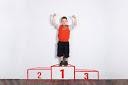
This phrase of King puts things in their place: it is not that in order to be successful in today’s world it is necessary to sacrifice the little joys and pleasures, as well as the affections. Nor is necessary to suppose that in order to “be happy” we must forget about the human desire to stand out and feel especially competent in any given activity.
Raising the issue as a dichotomy between “neurotic” competitiveness and “humanistic” laxity is to raise a false dilemma, which is not in accordance with the current vision of work in a company, or the concept of Emotional Intelligence, which encompasses both components.
HOW TO STIMULATE CHILDREN’S COMPETITIVENESS

The issue, fortunately, is not only solvable, but the mistake lies actually in supposing an incompatibility that does not really exist. Or rather, it exists when demands are made on a child that goes beyond his abilities, and then he is induced to feel bad when he does not meet them. In this way, instead of the child developing self-confidence, all he will achieve is a decrease in his self-esteem.
On the contrary, we must:
- Compare each infant with himself
- Observe his abilities and skills
- Demand only a little more than what he already does
- Praise him for his personal achievements
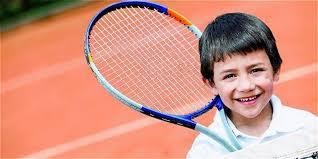
Following this procedure the child will conclude that his effort was worth it. He will be encouraged to be persistent. He will be more and more interested in this task. The task will become a challenge, and he will do better and better at it. In short, he will increase his self- efficacy (Bandura, 1987).
In my book WHAT DO I DO NOW? NO ONE TAUGHT ME HOW TO BE A MOM! You will find 27 common problems in children from birth to 12 years. In relation to this specific issue of how to stimulate a healthy competitiveness and generate self-efficacy, you can review What can I do if they are teaching my child at school to be too competitive? And Generating self-efficacy.
You can also consult, in this same Blog To reinforce children; as well as visit Facebook Urquia Larralde (psykia), Instagram @psykia20 and Twitter @psykia20. I appreciate any comments, questions, suggestions, or constructive criticism that you want to make through psykia20@gmail.com or by WhatsApp: +58 414 929 1676. They are welcome and I will gladly answer them.
BIBLIOGRAPHIC REFERENCE:
Bandura, Albert (1987): Pensamiento y Acción, Martínez Roca, Barcelona.

I like the efforts you have put in this, thank you for all the great content.
Woh I enjoy your posts, saved to my bookmarks!
Bardzo podoba mi się twoja strona. Jeżeli chcesz się lepiej ze mną poznać i potrzebujesz odżywek lub suplementów diety na masę sprawdź mój blog!
Great, thanks for sharing this post.Much thanks again. Really Great.
An additional issue is that video games can be serious in nature with the primary focus on learning rather than amusement. Although, we have an entertainment part to keep your sons or daughters engaged, each one game is frequently designed to work towards a specific expertise or curriculum, such as math concepts or research. Thanks for your article.