
MY SON IS A HARASSER
When parents are told that their child bullies other children at school, we can imagine several reactions, one of them may be to minimize the issue by saying that other children should know how to defend themselves, another reaction could be to experience guilt, shame and perhaps a feeling of helplessness.

WHAT TO KNOW ABOUT THE CHILD BULLY
The bully is a child who usually makes simplistic and definitive judgments about others, such as: “those who don’t fight are cowards”, or “an eye for an eye and a tooth for a tooth”. In close relation to this, he frequently uses disqualifying stereotypes in reference to certain groups of people, going so far as to justify their death (Rincón, María Guadalupe, 2012).
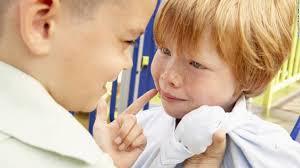
Another characteristic of these boys is that they have little tolerance of frustration, which they frequently manage through violence. It momentarily relieves their anxiety, although in the long run it tends to generate guilt. They then often seek to alleviate that guilt by further disqualifying the victim and justifying a new assault. This cycle ends up generating addiction and, consequently, a spiraling increase in violence.
HOW TO ADDRESS HARASSING BEHAVIOR
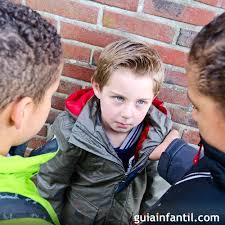
It is completely contraindicated for parents to minimize the problem or to attack the child, because, in the first case, they send the message that bullying others is allowed and, in the second, that it is normal to resolve things by blows. In both cases, they would be reinforcing the boy’s violent behavior.
The appropriate attitude for parents is to be well informed of the child’s behavior, observe how serious it is and face the matter with courage and without self-deception.
In addition, parents would have to observe closely to what extent the stereotypical judgments and views of the child are present in their own vision and thinking, and seek to overcome them. To do this, they require, like the boy, to come into contact with the people they have previously condemned, and be open and willing to explore what they have in common with them (Rincón, María Guadalupe, 2012).
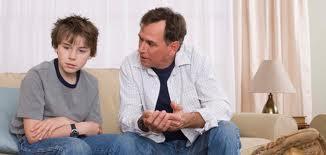
Other techniques are helpful, such as helping the child to:
- Develop empathy towards the potential victims, which will generate guilt,
- Learn how to manage his emotions: yoga, biofeedback therapies, deep muscle relaxation, all contribute to this
- Avoid moving on to the act of violence: signs in places visible to him, warning him about the consequences, may be useful.
Parents must try to understand the child and accompany him when it is his turn to face that guilt, and they should also administer an educational punishment in his possible relapses, punishment that will basically consist of repairing the damage
In my book WHAT DO I DO NOW? NO ONE TAUGHT ME HOW TO BE A MOM! You will find this and 26 other problems that can occur in children from birth to 12 years of age. In relation to this specific topic of bullying, you can review What should I do if I’m told my son is bullying other children at school? and What should I do if my son is the victim of bullying at school?
You can also check in this same blog Discipline with love, as well as visit Facebook Urquia Larralde (psykia), Twitter @psykia20 and Instagram @psykia20.
I appreciate the observations, questions, suggestions or criticisms that you may want to make through psykia20@gmail.com. You will be welcome and I will gladly reply.
BIBLIOGRAPHIC REFERENCE:
Rincón, María Guadalupe (2012): Bullying. Acoso Escolar, Trillas, Mexico.
