
IS A POSITIVE THOUGHT ENOUGH?
“I have full confidence that it will be solved ” or: “let’s have positive thinking and you will see how we attract the solution.” These phrases are usually said as consolation, often with a purported predictive character.

Phrases like these are intended to solve the problem; they convey the idea that it is practically unnecessary to talk about the matter anymore, since its resolution has already been decreed.
HOW FAR THE POWER OF OUR THINKING GOES
As so often happens, attributing power to our thoughts seems to be a reaction against a fatalistic vision, which used to make black definitive predictions about a future inexorably determined by fate.

With this, the intention is to make a 180-degree turn, changing a sinister future for a luminous one, which now, on the contrary, will only obey our mind.
But, as a saying goes, “wishing for something doesn’t make it true.” It is true that our thinking, the way we interpret what happens to us, can help us achieve our goals, but only to the extent that our thinking is rational and directs and maintains us in effective action (Bandura, 1987).
HOW TO DIRECT OUR THOUGHTS TOWARDS EFFECTIVE ACTION

Let’s apply these ideas in our condition as parents. Suppose our child gets bad school grades. What to do about that? A perhaps still very common reaction is to punish and possibly disqualify the child by using epithets that only manage to sink him deeper in his feelings of failure.
A second possibility is to fill ourselves, and perhaps try to fill him, with ‘positive’ thoughts by decreeing, as we mentioned, that the problem will be magically overcome. However, neither solution will modify the child’s study habits, which is what is most likely required.

The pertinent thing is to direct our thoughts and actions to look for the possible causes of the poor school performance, and focus on solving them. In other words, an attitude is needed that is neither hopeless and fatalistic nor based on naïve illusions.
The causes of the poor school performance could be biological, cognitive, emotional or behavioral and the logical thing would be to investigate which one is (or which ones are) affecting the child, in order to correct them.
It seems silly to have to say it, but when evaluating human behavior we should adopt the same rational attitude with which we face a problem of plumbing, dampness or any other home repair.
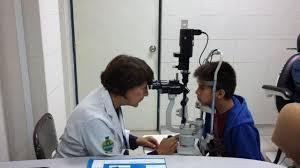
It is truly unfortunate that when it comes to dealing with the most important, sensitive and emotionally charged subject: our children, we abandon the reasonable and logical attitude with which we usually address domestic problems of lesser importance.
In my book WHAT DO I DO NOW? NO ONE TAUGHT ME HOW TO BE A MOM! You will find 27 problemas that can occur, relating to children from birth to 12 years of age. Regarding this topic of how to address the problems and difficulties of children, you can consult in PART II: PSYCHOLOGICAL PROCEDURES USED.
You can also consult in this same Blog: To reinforce children, To punish children, Developing good habits, Boosting good behavior, Is it better for my child to be competitive?
You can also visit Facebook Urquia Larralde (psykia), Twitter @psykia20 and Instagram @psykia20. I appreciate any observations, questions, suggestions or criticisms that you want to make through psykia20@gmail.com. They will be welcome and I will gladly reply.
BIBLIOGRAPHIC REFERENCE:
Bandura, Albert (1987): Thought and Action. Social Foundations, Publisher Martínez Roca, Barcelona, Spain.
