
DEVELOPING GOOD HABITS
Parents love having orderly children who put their toys away, and do their homework on their neat desks. On the contrary, when children are disorderly and leave everything strewn about the house, parents feel exhausted and unhappy.

Parents tend to attribute such behavior to purported innate tendencies in the child. We often hear someone saying, he ‘turned out’ like his father, mother, or grandmother, etc.; this is simply not true.
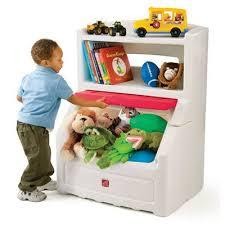
Those habits were learned, albeit it could also be due to the child’s own tendencies making him turn towards one or the other orderly/disorderly behavior of the parents who never realize to what extreme they have been modeling the children’s behavior (Millenson, 1976).
WHAT YOU SHOULD KNOW ABOUT TEACHING GOOD HABITS
Every child can learn good habits, be they work habits, study habits, punctuality, sports habits, in tidiness, etc; it’s up to the parents to teach them.

How can I do it? In the first place, by example, and by a timely reward of good behavior that boosts their habits. We can’t very well expect our children to develop good habits without our appropriate and relevant guidance (Sundel and Stone Sundel, 1981).
HOW CAN I TEACH GOOD HABITS
In my book WHAT DO I DO NOW? NO ONE TAUGHT ME HOW TO BE A MOM! we present several cases where it was necessary to teach good habits to children. To do so in an efficient manner it is essential to know and identify specifically which behavior we want to improve.
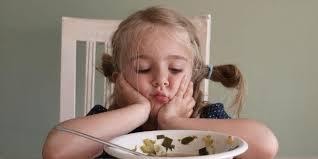
Such is the case of Andrea, whose mother was very worried because of her reluctance to eat. But if we just say we want her to ‘increase her appetite’, it’s too ambiguous hence, useless. The goal we set for ourselves was: “Andrea should eat all the food set before her in a timely manner”.
We can also cite the case of Ignacio, whose mother complained that “he didn’t like to cooperate with house chores”; but, what does that mean from a behavioral point of view? Telling a child,” you have to cooperate in household tasks” doesn’t help one bit. The goal we set for ourselves was: “Ignacio should wash the plate he used once he finishes eating.”
That’s a precise, specific task that he, and anyone else can understand perfectly well. Then gradually, you can ask him to do something else. We’ll talk about that later.
It’s also essential to reward the child once he has carried out the specified task. And don’t think prizes are just material objects; the attention you pay the child, as well as expressions of love from his parents are powerful boosters for children.

Hence, a hug, an acknowledgement of his work, a kindly tone of voice, even a compassionate look, are so powerful it’s really sad they’re not used more often. Andreas’s case, who is often reluctant to eat, is complicated, as food itself was to be the reward.
However, when what the child wants is an expensive object, you can use the “Token Economy” technique whereby the child can win points, tokens, or happy faces, and once he has enough, he can exchange them for the desired object.
In my book, WHAT DO I DO NOW? NO ONE TAUGHT ME HOW TO BE A MOM!, you’ll find 27 frequent situations in children from the moment they’re born to the age of 12. Regarding this issue, look up Developing habits through immediate reinforcement, Developing habits through Token Economy, and Modeling behaviors, thoughts and feelings.
Also look in the same Blog, you’ll find: To reinforce children and He delays getting dressed, likewise, you can visit Facebook at Urquia Larralde pyskia, Twitter @psykia20 and Instagram @psykia20.
I welcome your comments, questions, suggestions or criticisms at psykia20@gmail.com, or via WhatApp: +58 414 920 1676, and will gladly address them.
BIBLIOGRAPHIC REFERENCE:
Bandura Albert (1987): Pensamiento y Acción. Fundamentos Sociales, Publisher Martínez Roca, Barcelona, España.
