
HOW DO I TAKE AWAY THE PACIFIER?
When a baby cries, it’s natural that we pay attention, because the baby is expressing a need that we must satisfy. However, the baby must learn, progressively, how to tolerate frustration. One of the things that a toddler must leave behind, however painful it may be, is the pacifier, which so often calmed the baby’s hunger and anxiety.
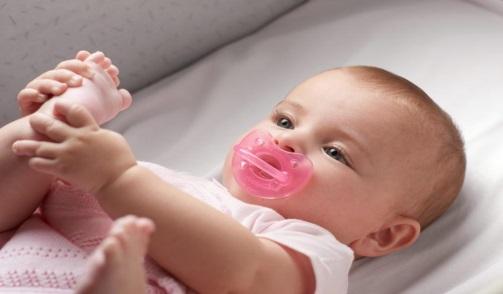
As mentioned, the baby seeks to satisfy needs by crying; however, progressively the baby needs to learn, through practical acts because he or she is not ready for explanations, the following:
- Not everything can be attained
- There are other ways to ask for what she or he wants

HOW TO TAKE AWAY THE PACIFIER
It is convenient to talk to the baby and explain, without harsh words or melodrama, that he or she is big now, and that when children grow they must leave behind the pacifier. If the baby agrees, we can ask him or her to accompany us to burn the pacifier or throw it in the garbage.
Later, when through habit the baby asks for the pacifier, before he or she begins to cry, we can offer a cookie the baby likes or entertain her or him in conversation or with a game, as a strategy to lessen the baby’s frustration.
If the strategy doesn’t work and the baby begins to cry asking for the pacifier, we must not pay further attention to the baby. In this it is necessar to be very firm, even if the baby is crying and kicking on the floor, seems not to be breathing and turns blue; we must not yield, or even look at the baby.
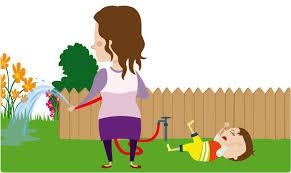
If the baby is neurologically healthy, there is no danger. If the baby’s response to frustration provokes intense tantrums, a neurological evaluation can be carried out, for the parents’ peace of mind, to discard the possibility of undesirable consequences.
It is not about scolding or getting angry with the baby; we must behave as if we don’t notice that the baby is protesting (Sundel y Stone Sundel, 1981).
If you yield once, not only will you lengthen the process, the baby will also learn that he or she can manipulate you and you, on the contrary, will lose confidence in your ability to manage the situation. Don’t think that the baby can’t manipulate you because he or she hasn’t elaborated language; the baby knows from experience, and that is sufficient.

Everyone in charge of the baby must behave in the same manner. If, for example, we know that grandma won’t be able to maintain a firm attitude when the baby cries for the pacifier, we must give grandma a holiday until the process of overcoming the use of the pacifier is completed.
Another fundamental thing to keep in mind, is that once the baby’s tantrums are over, we must continue our relation with the baby as if nothing had happened. We must not scold nor be overly complacent with the baby; it is a matter of simpling continuing with routine behavior.
In my book WHAT DO I DO NOW? NO ONE TAUGHT ME HOW TO BE A MOM! You will find 27 common problems in children from birth to 12 years. In relation to this specific issue you can review the topics: What do I do if my child has temper tantrums? and Extinguishing behaviors
You can also consult in this same blog: My son has temper tantrums and Extinguishing behaviors, as well as by visiting Facebook Urquia Larralde (psykia), Twitter psykia20 e Instagram psykia20
I appreciate any observations, questions, suggestions or criticisms you want to make through psykia20@gmail.com. You will be welcome and I will gladly reply.
BIBLIOGRAPHIC REFERENCE:
Sundel, M. y Stone Sundel, S. (1981): Modificación de Conducta Humana, Publisher Limusa, México.
