
LEARN BY WATCHING
Learning by observing others, also present in many animals, opens up to the human being an enormous, quick way of gaining information about endless things, in addition to acquiring values and attitudes, as well as ways of thinking, feeling and behaving.

Recognizing this highlights the value of example as a powerful method of teaching, which has been recognized since time immemorial and which contemporary psychology has done nothing but corroborate.
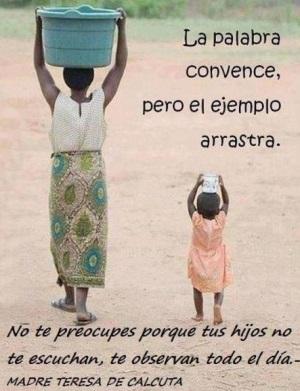
The example or modeling can be direct, through parents, family members, teachers, friends, and anyone who interacts with children. It can also be indirect through books, movies, television, and what today has an enormous relevance: social networks. (Bandura, 1987).
WHAT TO KNOW ABOUT LEARNING BY OBSERVING
These all-important influences are going to occur, whether they are produced intentionally, consciously and systematically, or not; and their effects can be for good or bad. What is certain is that these influences will be there, supporting or opposing each other in a whirlwind of stimuli that reaches children, and adults too, from the most diverse places.
However, not all stimuli have the same power; a person we perceive as having prestige will exert on us, adults and children, a greater influence than someone we consider more common.
Someone we see as our peer can also exercise powerful modeling. If a companion takes certain risks, we will surely be encouraged to take them too. If we see our companion overcoming limitations, we will think that we can also do it, and so on. In adolescents this is very clear.
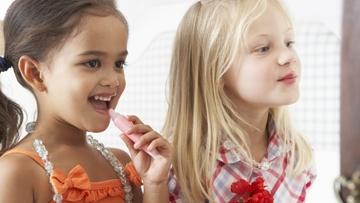
In addition, as we have mentioned, these models or examples can be indirect, through the media, which today has an enormous, and perhaps worrying, importance.
Learning from others doesn’t mean we do an exact imitation of their opinions and behavior. We are likely to select what we like most from each of the models before us, and integrate them in a creative and unique learning process (Bandura, 1987).
HOW TO TEACH BY EXEMPLIFYING

It is a truism that to teach by example it is convenient to be a good model. This is much more than a technique, and requires us to be demanding of ourselves if we care about the imprint we will leave on children.
In my book: WHAT DO I DO NOW? NO ONE TAUGHT ME HOW TO BE A MOM!, we show how modeling was used, accompanied by other techniques, so that Andrea learned to enjoy food, What should I do if my daughter frequently refuses to eat?, Patricia was able to overcome her fears, What can I do if my daughter is too apprehensive, and Felipe his dogmatic speech conducive to violence, What should I do if I’m told my son is bullying other children at school?, and Enrique his techno addiction What should I do if my son is a techno addict?
My book also explains how Beatriz was able to talk about the sexual abuse to which she was subjected, What should I do if I suspect my daughter is being a victim of sexual abuse?, how Andreina’s children learned to accept the separation of their parents, What can I do if my children are having a hard time accepting that I’m getting a divorce?, how Susana’s children came to obey her, What can I do if my children won’t obey me? and What should I do if all I want for my children is for them to be happy?
You can also consult in this same blog: She refuses to eat, My daughter is very fearful and My son is a harasser, as well as by visiting Facebook Urquia Larralde (psykia), Twitter psykia20 and Instagram psykia20
I appreciate any observations, questions, suggestions or criticisms you want to make through psykia20@gmail.com. You will be welcome and I will gladly reply to your comments.
BIBLIOGRAPHIC REFERENCE:
Bandura, Albert (1987): Pensamiento y Acción. Fundamentos Sociales, Publisher Martínez Roca, Barcelona, Spain.
