
WE ARE THE REWARD
As parents, we should be an enjoyable presence for the children! It’s the first thing we have to do, besides becoming a model worth imitating. Education is first and foremost, self-education.
If we can’t win their respect and admiration, as well as their love and joy, we can achieve very little, or nothing at all inasmuch as their education. Just think, dear reader, about someone whom you admire greatly who shows you appreciation and affection. Quite possibly, that someone might exercise some vital influence over you.

Imagine, on the contrary, someone for whom you feel no sympathy or respect at all; surely everything that person tells you will seem wrong to you. Sometimes it’s simply hearing the person say something, anything, and that immediately makes you want to dissent.
Teenagers’ rebelliousness tends to be portrayed, wrongly, I feel, as if it were an inevitable phase of growing up. Could it be instead that it’s due to the fact that during their childhood your parenting lacked substance and affection? As a result of this it might be that at that moment the child begins to feel empowered and sufficiently independent to rebel.
HOW DO WE BECOME A REWARD

The theoretical principle on which we base what we have called “becoming a reward” is simple: it means that it is suitable for parents, or anyone who aspires to educate a child, to be associated to pleasantness.
Non-contingent reinforcement, the technical name for this, consists in observing or finding out what are the preferences or needs of a particular person, and giving it to him/her without asking for anything in return (Sundel and Stone, 1981).
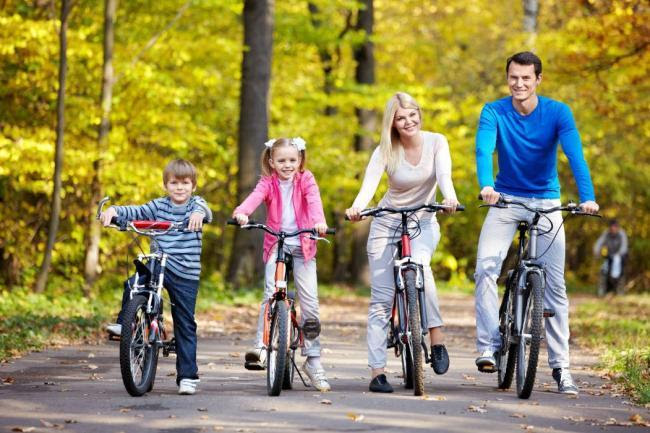
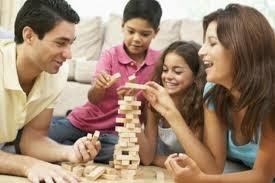
As parents we tend to do this spontaneously as we play with our kids, work amicably with them, talk, eat at the table sharing anecdotes and feelings with them. We become associated with pleasant sensations during that time, thus making our mere presence, a reward.
As parents we will thus have a powerful weapon in our hands; otherwise, we lack the necessary and positive tools.

Perhaps this principle might sound silly, since the presence of parents, unless they are extremely violent ones, tends to be enjoyed by the children. However, it acquires special importance when it involves winning over adopted children, a nephew who’s come to live with us, the children of the new parent, and similar cases. It also applies to parents who have not been sufficiently attentive or affectionate, and decide to change.
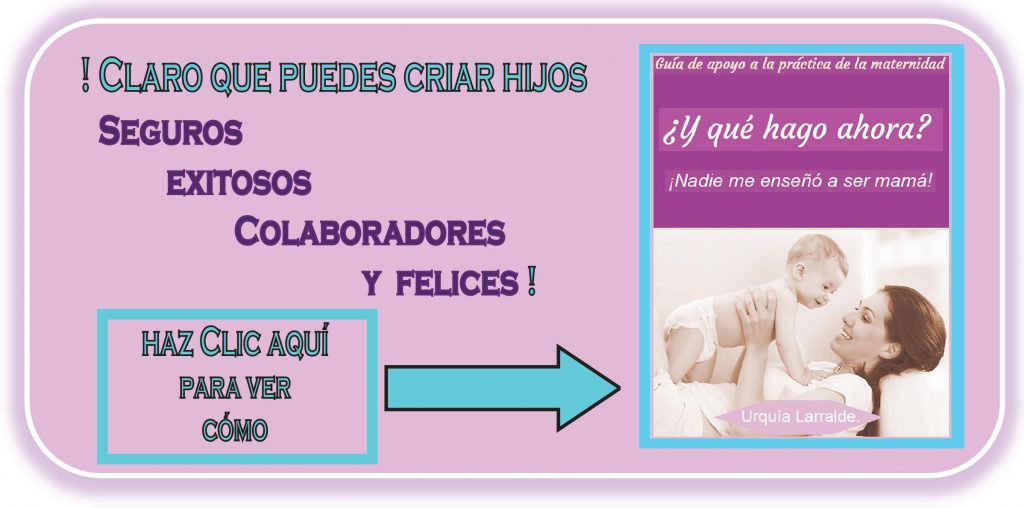
In my book, WHAT DO I DO NOW? NO ONE TAUGHT ME HOW TO BE A MOM! you’ll find 27 different frequent situations you might encounter in children from birth 12 years old. Regarding this issue, we present the case of a very withdrawn, reticent man, who had no idea how to win over the children of his new partner. He was not requested to change the way he was, rather to show more interest in the children’s needs and to comply with them without conditioning them. You can also research deeper in the following chapters: What can I do if my children don’t accept my new special friend? And, Becoming rewards ourselves, as well as other similar ones.
You can also check out those issues on this same blog Educate and Discipline with love, likewise by looking me up in Facebook, Urquia Larralde (psykia), Twitter, @psykia20, and Instagram, @psykia20.
At psykia20@gmail.com, or WhatsApp + 58 414 920 1676, I welcome and will gladly address any commentaries, questions or critiques you might have.
BIBLIOGRAPHICAL REFERENCE
Sundel and Stone (1981): Modificacion de Conducta Humana, Publisher Limusa, Mexico
