
DEVELOPING ASSERTIVE RESPONSES
Assertiveness consists of expressing personal opinions, feelings and needs in a socially acceptable way, as well as defending our rights and respecting those of others. It also includes the full exercise of our social relations, whether recreational, confrontational or directive, in both friendly and hostile circumstances.

As can be seen, assertiveness consists of finding an adequate balance between your claim and personal expression, while respecting those of other people. Also, in the full exercise of social activities, enjoying or directing them if that is the case, and confronting others when required; regardless of whether the relations are friendly or not.
HOW YOU LEARN TO BE ASSERTIVE
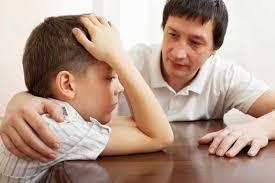
It can be assumed that to develop assertiveness it is necessary that the child be educated in an environment in which his parents or educators respect, and even stimulate, his or her right to express their own opinions, attend to the child’s requirements and respond kindly to his or her feelings; but at the same time set limits, enabling the child to see that others also have their own rights.
From the above, it is easy to deduce how we should educate our children, if we want them to be assertive. However, if that is not the case, assertiveness can be relearned.
HOW TO RELEARN TO BE ASSERTIVE

The bullied child is a clear and painful sign of lack of assertiveness, which we can use as an example of learning assertiveness. Children who are victims of bullying are generally those who have not been treated with dignity at home, and have thus become accustomed to accepting the role of the weak. In those cases, it is as negative to overprotect the child, as it is to leave him or her alone to face harassment (Knobel 2013).
What is required is to develop a joint program, in which parents and the school commit to raising the child’s self-esteem, teaching him or her to respect their personal characteristics and to relate to others. The child, on the other hand, undertakes not to expose him or herself to situations in which he or she may be harassed (M. G. Rincón, 2012).
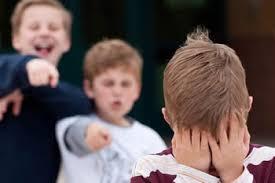
To help a bullied child develop social skills (assertiveness), a therapist should act out the behavior of the bully for the child, as well as show how the child has to deal with the behavior. The child rehearses the answers, in different circumstances, and the therapist politely corrects him or her by pointing out, not only what to say, but also with which body and facial expressions, as well as with which tone of voice.
This is done gradually, going from the representation of the least threatening situations to the most fear-generating. Also by partially correcting the different verbal and non-verbal components of the response, respecting of course, the style of expression of adolescents, but maintaining the sense of assertive behavior.
Subsequently, the child is encouraged to face real life situations similar to those rehearsed, always going from minor to major, avoiding the possibility of a negative result.
More details about this topic can be found at: WHAT DO I DO NOW? NO ONE TAUGHT ME HOW TO BE A MOM!, especially the topics What do I do if my child is bullied? and Develop assertive responses. You can also consult in this same Blog Suffering bullying and Something more about assertiveness; as well as by visiting Facebook Urquia Larralde (psykia), Twitter @psykia20 and Instagram @psykia20
I appreciate any observations, questions, suggestions or criticisms you want to make through psykia20@gmail.com. You will be welcome and I will gladly reply.
BIBLIOGRAPHIC REFERENCE:
Knobel Freud, Joseph (2013): El reto de ser padres, Edit. Melvin, C.A., Venezuela.
Rincón, María Guadalupe (2012): Bullying. Acoso escolar, Edit. Trillas, Mexico.
