
SCHOOL AND EMOTIONAL LEARNING II
In a previous chapter, School and Emotional Learning I, following M. G. Rincón (2012), we said that schools should not only teach children to count, read and write; they should also educate them emotionally by providing them with intra and interpersonal skills. On that occasion we spoke of the first of these: self-control, stress management and identification of emotions.

Among the interpersonal skills, we then commented on personal hygiene, smiling, making eye contact, courtesy and truthfulness; leaving for this opportunity, empathy, communication and conflict resolution.
About empathy we can say that after 5 or 6 years, the child begins to become sensitive to the needs of classmates and to let himself or herself be invaded by their emotions, without being confused by them; that is, the child begins to exercise empathy. This is an essential element to prevent violence, as well as to develop a deeper communication that allows children, and also grown persons, to feel understood and accompanied.
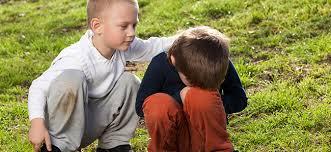
Although we all recognize the importance of communication, it is essential that we do not forget that for it to be useful, it must be coherent; that is, there must be consistency between what is said in words and what is manifested with body and facial expression, tone of voice and other vital signs such as paleness, agitation and sweating.
It is convenient to send clear messages, listen to our interlocutor, clarify and reformulate when necessary, as well as to know how to read between the lines of the other person’s message, and to take responsibility for one’s own opinions using the first person singular.
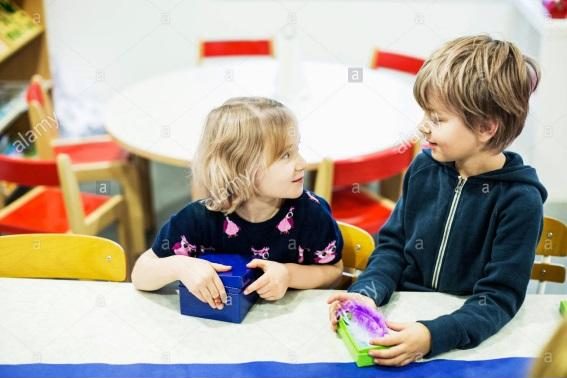
In Canada, for conflict resolution in primary schools, a team of teachers, educators, school psychologists and parents recruits, selects, trains and monitors mediators chosen from fourth, fifth or sixth graders.
Previously, the children, through sociometry, have anonymously selected the five most suitable children for this job. The teacher also participates in the selection, although the weighting of his vote is higher.
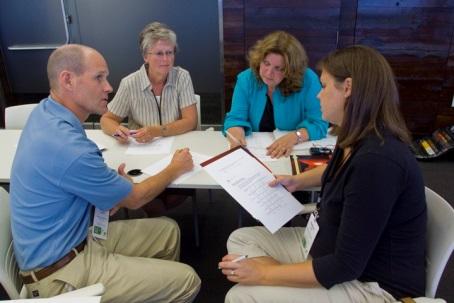
After going through a training and interview process, those selected for this mediation task are accredited. They take action only when requested by students in conflict, witnesses of an incident or requested to do so by the teacher.
Mediators should meet with each other to discuss their work, with adult supervision. The mediation team accompanies, motivates and guides them, as well as rewarding them at the end of the year with a recreational activity.
The mediator deals with conflicts at several stages:
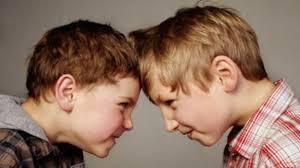
- Stabilization of the conflict: calls on the belligerents to agree to the rules of mediation. Only when they do so does the process continue, otherwise it concludes.
- Communication: each party exposes its version of events, takes responsibility using the “I”, points out how it feels, uses appropriate language and listens to the other party without interrupting. The mediator intervenes only to give the floor, clarify or reflect what has been said.
- Negotiation: The two sides seek peaceful solutions.
- Concertation: a satisfactory solution for both is agreed.
- Registration: The mediator writes down all the details relevant to the statistics that are brought to the follow-up meeting.
- Follow-up: Adults adjust measurements.
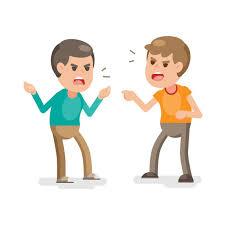
M. G. Rincón points out (2012) that these experiences should be supported by continuous and generalized practice by teachers and parents, an opinion with which I absolutely agree, in order that students acquire the reflex of “seeking a peaceful solution to resolve disagreements, before opting for violence … the philosophy that underpins this attitude is: ‘Attack problems and not people’… aggressiveness is thus given an opportunity to express itself through a constructive and innovative channel” (p. 123).
Other aspects related to this topic will be found in my book WHAT DO I DO NOW? NO ONE TAUGHT ME HOW TO BE A MOM! especially Developing empathy. You can also check in this same blog: Experiment and show empathy, Psychology as pedagogy and Suffering school harassment as well as visit Facebook Urquia Larralde (psykia), Twitter @psykia20 and Instagram @psykia20
I appreciate the observations, questions, suggestions or criticisms that you want to address to me through psykia20@gmail.com. You will be welcome and I will gladly reply to your comments.
BIBLIOGRAPHIC REFERENCE:
María Guadalupe Rincón (2012). Bullying.Acoso Escolar, Trillas, Mexico.
